
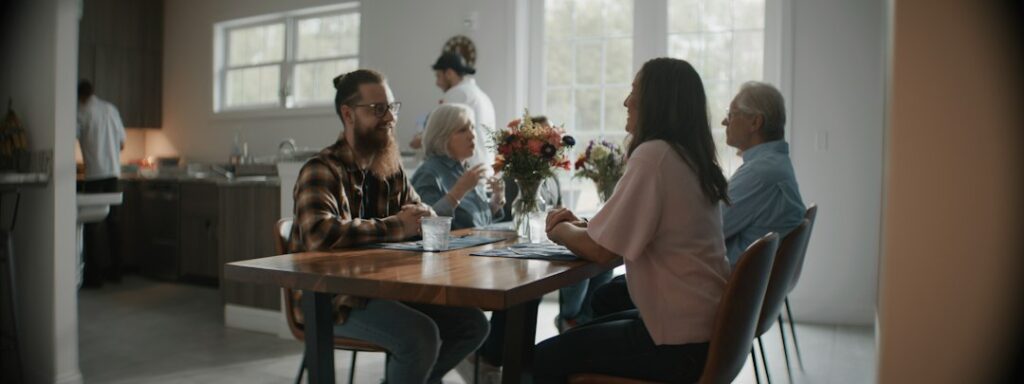
Can couples live together in assisted living?
Yes. Many assisted living residences allow married or committed couples to live in the same residence, even when their care needs are different. A couple may share a living unit if both people agree and the residence determines that the arrangement is appropriate and safe.
Assisted living can support couples by providing daily help, meals, activities, housekeeping, transportation options, and access to health-related services without requiring both partners to have the same level of independence.
The details vary by residence. Couples should ask about shared rooms, private units, different care levels, medication assistance, overnight support, and what happens if one person later needs more intensive care.
What if one spouse needs help and the other does not?
A spouse who is independent may still be able to live in the same assisted living residence as a partner who needs help with bathing, dressing, mobility, medication reminders, or other daily routines.
This arrangement can prevent couples from being separated simply because their abilities differ. The more independent spouse may receive little or no hands-on assistance, while the other receives a personalized service plan.
The residence may assess each person separately. That assessment commonly considers:
- Mobility and fall risk
- Personal care needs
- Medication management
- Memory or communication concerns
- Dietary requirements
- Nighttime needs
- Ability to respond during an emergency
- Whether the residence can safely provide the required services
A couple should not assume that one spouse’s admission automatically guarantees the other spouse’s admission. Each person generally must meet the residence’s eligibility requirements and complete the necessary paperwork.
Do couples have to share the same room?
No. Couples may choose to share a unit, but separate bedrooms or separate living spaces may be more practical in some situations.
Sharing a unit may provide companionship and make routines easier. Separate spaces can be helpful when one person sleeps poorly, has different schedules, needs medical equipment, or requires more privacy.
Some couples begin with separate units near each other and later decide whether sharing would work. Others share a unit but use different areas for sleep, rest, hobbies, or personal care.
Before agreeing to share, couples should discuss:
- Privacy and personal space
- Different sleep schedules
- Snoring or nighttime movement
- Assistance with toileting or dressing
- Storage for medications and equipment
- Visitors and family routines
- What would happen if one spouse’s care needs increase
Both people should consent freely. A shared living arrangement should not be based only on family pressure or the belief that couples must remain in one room.
How can assisted living help couples stay connected?
Assisted living can reduce the household responsibilities that often place strain on a couple. Meals, laundry, housekeeping, building maintenance, and some transportation needs may be handled through the residence, leaving more time for conversation and shared activities.
Couples may eat meals together, attend programs, sit outdoors, participate in exercise or religious activities, or maintain familiar rituals such as morning coffee and evening television.
For a spouse who has become a caregiver, this change can be especially significant. The relationship may shift away from one partner supervising every task and toward both people receiving support appropriate to their needs.
That does not mean the independent spouse has no role. A partner may continue to offer emotional support, help make decisions, attend care meetings, or participate in activities. The difference is that the spouse is no longer expected to provide all daily care.
What happens if one spouse needs memory support?
Memory loss does not automatically mean a couple must live apart, but it can affect the available options. The residence must be able to provide a safe setting for the person with cognitive impairment, including appropriate supervision, routines, and responses to wandering or confusion.
Some couples remain in the same assisted living setting while receiving different services. In other cases, one spouse may need a secured memory-support area while the other lives in a less restrictive setting nearby.
A couple should ask whether residents in different care areas can visit freely, dine together, attend activities together, and maintain private time. It is also useful to ask how changes in memory, behavior, or mobility could affect the living arrangement later.
Planning early can give couples more choices than waiting until a crisis occurs.
How does assisted living address different care levels?
A residence may create an individual service plan for each spouse. One person might need reminders and help with bathing, while the other needs assistance with transfers, medication administration, or incontinence care.
The couple’s apartment or room does not determine the level of care. Each spouse’s needs are evaluated separately, and services may change as health conditions change.

Families should request a clear explanation of:
- Which services are included in the basic fee
- Which services cost extra
- How care needs are reassessed
- Whether nighttime assistance is available
- What medical services are provided directly or arranged separately
- What conditions could require a move to another setting
These questions are particularly relevant during winter in Jessup, PA, when snow, ice, shorter daylight hours, and difficult driving conditions can make errands and outside appointments more challenging for older adults.
What should couples ask before choosing a residence?
A tour should focus on how the residence handles real-life situations, not only how the building looks.
Useful questions include:
- Can both spouses live there if their care needs are different?
- Can a couple share a unit, and what written agreement is required?
- Are private units available if shared living stops working?
- How close can spouses live if they need different care areas?
- Can they eat meals and attend activities together?
- What happens if one spouse needs nursing care later?
- How are hospital stays, rehabilitation, or temporary absences handled?
- What are the rules for personal furniture, pets, visitors, and overnight guests?
- How are emergencies communicated to family members?
- What happens after a fall, change in behavior, or major decline in health?
It is also wise to review the residency agreement carefully. The agreement should explain fees, services, discharge or transfer conditions, room changes, and the process for adding or removing a spouse from a shared unit.
How can couples prepare emotionally and practically?
Moving together can still involve grief, even when the move improves safety. Couples may be leaving a longtime home, giving up possessions, adjusting to scheduled meals, or accepting help with private tasks.
Preparation can be easier when both people participate in decisions. Each spouse should identify important belongings, preferred routines, dietary needs, social interests, and personal boundaries.
Families can help by preserving familiar habits rather than treating the move as a complete reset. Photographs, favorite chairs, familiar music, calendars, and regular visits may help the new setting feel more personal.
The goal is not simply to place two people in the same building. It is to protect companionship while recognizing that each spouse may need a different kind of support. For many couples, assisted living works best when care is individualized, privacy is respected, and shared time remains a deliberate part of daily life.
